Learners Live

Enbridge and Meta Announce 1.6 GWh Wyoming Solar and Energy Storage Facility to Serve Data Center Needs

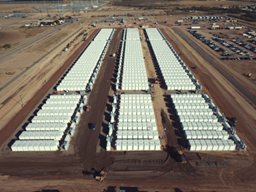
Independent power producer and renewable energy developer Enbridge has announced that Meta will purchase power delivered by the first phase of its Cowboy Project utility-scale solar and energy storage facility.  The plan for the $1.2 billion site located near Cheyenne, Wyoming includes 365 MW of solar generation capacity and a 200 MW, 1,600 MWh battery energy storage system (BESS) supplied and serviced by Tesla. The Cowboy Project expands the existing renewable energy partnership between Enbridge and Meta, which now totals approximately 1.6 GW of contracted capacity across North America, and includes a 600 MW solar projectand two wind projects in Texas. Enbridge and Meta announce 1.6 GWh Wyoming solar and energy storage facility to serve data center needs – Energy Storage

Is Waymo Ahead of the Curve? by Sam Klebanov

The Alphabet-owned company (Goggle) has 1,500 robotaxis ferrying passengers around Phoenix, San Francisco, Los Angeles, Austin, and Atlanta, with plans to roll into new locales. It quietly ramped up to provide over 250,000 weekly paid trips in the US, and beat Lyft’s market share in San Francisco, making it the clear front-runner in the quest to scale rides without a driver. Several companies have hit potholes while chasing the driverless taxi prize. Uber abandoned its internal efforts to develop an autonomous vehicle in 2020 and partnered with Waymo in 2024.  Amazon has yet to launch a paid service, but it is testing a couple dozen of its Zoox futuristic driverless cabs—described by some riders as a “toaster on wheels.” It plans to start giving rides to the public in Las Vegas later this year.  Tesla launched a robotaxi pilot service in Austin last month and one in San Francisco this weekend. Meanwhile, abroad…the roads are getting dominated by Chinese startups like Pony.ai and tech behemoth Baidu, which are operating or testing driverless taxis in China, the Middle East, and Europe.  The stakes are high: The global rideshare market will nearly quadruple from $123 billion in 2024 to $480 billion in 2032, Fortune Business Insights projects.  Is Waymo ahead of the curve?

Tesla Launches Robotaxi Program in Austin, Texas

Musk appears to be on the verge of making his robotaxi vision a reality with a test run of a small squad of self-driving cabs in Austin, Texas, that began Sunday with customers paying a $4.20 flat fee! Reaching a million may take a year or more, however, although the billionaire should be able to expand the service this year if the Austin demo is a success. The stakes couldn’t be higher, nor the challenges. Rival Waymo was busy deploying driverless taxis in Los Angeles, San Diego, Austin and other cities by using a different technology that allowed it to get to market faster. It just completed its 10 millionth paid ride. Musk says the robotaxis will be running on an improved version of Full Self-Driving and the cabs will be safe. He also says the service will be able to expand rapidly around the country. His secret weapon: Millions of Tesla owners now on the roads. He says an over-the-air software update will soon allow them to turn their cars into driverless cabs and start a side business while stuck at the office for eight hours or on vacation for a week. “Instead of having your car sit in the parking lot, your car could be earning money,” Musk said earlier this year, calling it an Airbnb model for cars. Musk finally rolls out his driverless Tesla taxis after years of promises | AP News

Remembering the Solemn Purpose of Memorial Day

Memorial Day is a federal holiday in the United States observed on the last Monday in May to honor and mourn U.S. military personnel who died while serving in the armed forces. The holiday traces its roots to the years immediately following the American Civil War (1861–1865), which caused massive casualties—roughly 620,000 soldiers dead, about 2% of the U.S. population at the time. Communities across the North and South began spontaneously decorating the graves of fallen soldiers with flowers, wreaths, and flags, a practice that gave rise to the original name: Decoration Day. On May 5, 1868, Major General John A. Logan, commander-in-chief of the Grand Army of the Republic (GAR)—a powerful Union veterans’ organization—issued General Order No. 11. This proclaimed May 30, 1868, as a nationwide “Decoration Day” to honor those who died in the Civil War. After World War I, the holiday expanded to honor all American service members who died in any war, not just the Civil War.  In 1968, Congress passed the Uniform Monday Holiday Act to create more three-day weekends for federal employees. This moved Memorial Day to the last Monday in May, effective in 1971, when it was also officially named “Memorial Day.” As one 1868 quote put it: “That Nation which respects and honors its dead, shall ever be respected and honored itself.”