


Learners Live

U.S., China Agree to Reduce Tariffs by $30 Billion

On Monday, September 28, the United States and China released extensive lists of products that will see significant tariff cuts, from American hair products to Chinese toys, in a deal expected to boost bilateral trade and be worth about $30 billion. The details came days after Chinese President Xi Jinping met with President Trump in Washington D.C. late last week. The lists included 1,619 items of U.S. goods entering China, ranging from agricultural commodities, hair and personal care products to timber and medical equipment. Coal from the U.S. will also be included. For Chinese goods exported to the U.S., 77 categories were covered, including fireworks, tableware, toys like dolls and puzzles, glass and wooden Christmas ornaments and soccer balls. Tariff rates on over 90% of the products would be subject to “most-favored-nation” levels, the Chinese commerce ministry said, meaning that country-specific tariffs will effectively be eliminated. Business News Today – tEDmag
The Trump Administration Has Decided Not to Extend USMCA Trade Deal

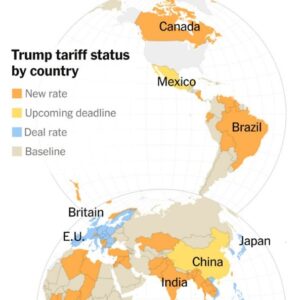
The United States has declined to extend the U.S.-Mexico-Canada Agreement (USMCA) during its mandatory six-year review, launching a 10-year countdown that could ultimately bring an end to the agreement unless the three countries agree to significant revisions. The move, announced Wednesday by the Trump administration, does not immediately terminate the agreement. Instead, it activates the treaty’s “sunset clause,” requiring annual reviews until 2036 unless the United States, Mexico, and Canada reach a consensus on extending the pact for another 16 years. The decision injects fresh uncertainty into one of the world’s largest trading blocs, which governs nearly $2 trillion in annual trade among the three nations. The Trump Administration Has Decided Not to Extend USMCA Trade Deal. Now A Countdown Begins to Change It | IBTimes

Trump Announces ‘Massive’ Trade Deal with Japan with 15% Tariffs by Lim Hui Jie

President Donald Trump on Tuesday stateside announced that he had made the “largest Deal ever” with Japan, that involves “reciprocal” tariffs of 15% on the country’s exports to the U.S.

  • Trump said that Japan will invest $550 billion into the United States, adding that the U.S. will “receive 90% of the Profits.”
  • He also said Japan will “open their Country to Trade including Cars and Trucks, Rice and certain other Agricultural Products, and other things.”
  • The U.S. president added that the deal would also create “Hundreds of Thousands of Jobs.”  Trump announces ‘massive’ trade deal with Japan with 15% tariffs

Google to Fund NECA Training Program

Google is announcing a new paper and support for an effort to train 100,000 electrical workers and 30,000 new apprentices in the United States. This is Google’s news release: AI presents the United States with a generational opportunity for extraordinary innovation and growth. The deployment of AI will grow the American economy, create jobs, accelerate scientific advances and more. Fully realizing these opportunities requires an effort to rapidly increase the capacity of the nation’s existing, sometimes antiquated energy system. This in turn requires accelerating innovation and investment in advanced energy technologies; optimizing use of the existing grid and unlocking construction of new transmission infrastructure; and developing the labor force needed to build new energy infrastructure. Through shared public and private efforts to introduce and support training programs like this one, the U.S. can develop a model for training the next generation workforce. Google to Fund NECA Training Program – electrifiED

White House Narrows April 2 Tariffs

The White House is narrowing its approach to tariffs set to take effect on April 2, likely omitting a set of industry-specific tariffs while applying reciprocal levies on a targeted set of nations that account for the bulk of foreign trade with the U.S.  President Trump has declared his April 2 deadline to be “Liberation Day” for the U.S., when he will put in place what is called reciprocal tariffs that seek to equalize U.S. tariffs with the duties charged by trading partners, as well as tariffs on sectors like automobiles, pharmaceuticals and semiconductors he repeatedly said would be enacted on that day. The administration is now focusing on applying tariffs to about 15% of nations with persistent trade imbalances with the U.S.  Despite economic concerns and global pushback, Trump reiterated his goal of using tariffs to restore trade balance and economic strength.  White House Narrows April 2 Tariffs – WSJ

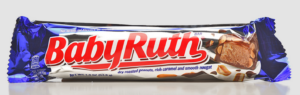
The Creator of Baby Ruth Actually Sued Babe Ruth –The Baby Ruth candy bar was created by the Curtiss Candy Company in 1920 — the same year that baseball legend Babe Ruth hit a then-record 54 home runs. But the Great Bambino was irked that the company was selling a candy bar with such a similar name to his own without offering him any royalties. Rather than take the Curtiss Candy Company to court, the Sultan of Swat decided to make his own candy bar, and in 1926 he debuted Ruth’s Home Run bar. The Curtiss Candy Company responded by turning the tables and taking Ruth to court. They accused the slugger of trying to steal their trademark and capitalize on the success of their brand. In a 1931 deposition, Curtiss founder Otto Schnering insisted the candy was named after “Baby Ruth” Cleveland — the daughter of President Grover Cleveland.  He also attested that the company came up with the name in 1919 before the baseball player had become a household name and that the name was merely coincidental. While the validity of those claims is disputed to this day, the court nonetheless ruled in favor of the candy company, forcing Ruth to end his foray into the world of candy.