


Learners Live

U.S., China Agree to Reduce Tariffs by $30 Billion

On Monday, September 28, the United States and China released extensive lists of products that will see significant tariff cuts, from American hair products to Chinese toys, in a deal expected to boost bilateral trade and be worth about $30 billion. The details came days after Chinese President Xi Jinping met with President Trump in Washington D.C. late last week. The lists included 1,619 items of U.S. goods entering China, ranging from agricultural commodities, hair and personal care products to timber and medical equipment. Coal from the U.S. will also be included. For Chinese goods exported to the U.S., 77 categories were covered, including fireworks, tableware, toys like dolls and puzzles, glass and wooden Christmas ornaments and soccer balls. Tariff rates on over 90% of the products would be subject to “most-favored-nation” levels, the Chinese commerce ministry said, meaning that country-specific tariffs will effectively be eliminated. Business News Today – tEDmag
The Trump Administration Has Decided Not to Extend USMCA Trade Deal

The United States has declined to extend the U.S.-Mexico-Canada Agreement (USMCA) during its mandatory six-year review, launching a 10-year countdown that could ultimately bring an end to the agreement unless the three countries agree to significant revisions. The move, announced Wednesday by the Trump administration, does not immediately terminate the agreement. Instead, it activates the treaty’s “sunset clause,” requiring annual reviews until 2036 unless the United States, Mexico, and Canada reach a consensus on extending the pact for another 16 years. The decision injects fresh uncertainty into one of the world’s largest trading blocs, which governs nearly $2 trillion in annual trade among the three nations. The Trump Administration Has Decided Not to Extend USMCA Trade Deal. Now A Countdown Begins to Change It | IBTimes

Trump Wins Saudi Pledge to Boost US Investment to $1 Trillion

Mohammed bin Salman pledged to increase Saudi investment to $1 trillion. The original $600 billion plan envisioned expanded Saudi trade and investment over four years, spanning energy, infrastructure, technology and defense cooperation. Recent deals linked to the pledge already include huge orders for U.S. weapons and advanced artificial-intelligence hardware, as Saudi-backed firms sign agreements with chipmakers and cloud providers to build data centers and AI hubs.  The money is expected to land in U.S. factories, energy projects, construction, and cutting-edge tech. Trump Wins Saudi Pledge to Boost US Investment to $1 Trillion | Newsmax.com

The AI Cold War That Will Redefine Everything By Josh Chin and Raffaele Huang

China’s leaders were anxious and frustrated. The world’s most promising new technology was being dominated by OpenAI, Google and other American companies. The U.S. still has a clear lead, producing the most powerful AI models. China can’t match it in advanced chips and has no answer for the financial firepower of private American investors, who funded AI startups to the tune of $104 billion in the first half of 2025, and are gearing up for more. But it has a massive population of capable engineers, lower costs and a state-led development model that often moves faster than the U.S., all of which Beijing is working to harness to tip the contest in its direction. The U.S. still has a clear lead, producing the most powerful AI models. China can’t match it in advanced chips and has no answer for the financial firepower of private American investors, who funded AI startups to the tune of $104 billion in the first half of 2025, and are gearing up for more. But it has a massive population of capable engineers, lower costs and a state-led development model that often moves faster than the U.S., all of which Beijing is working to harness to tip the contest in its direction.  Both countries are driven as much by fear as by hope of progress and believe market share for their companies across the world is up for grabs—and with it, the potential to influence large swaths of the global population. The AI Cold War That Will Redefine Everything – WSJ

Trump Meets with Xi, Declares Immediate Cut to Tariffs by Josh Chin Follow and Meridith McGraw

U.S.-China summit offers relief to both sides while high-stakes rivalry carries on. President Trump and Chinese leader Xi Jinping emerged from their first face-to-face meeting in six years with a temporary truce in the bruising trade fight between the two superpowers. Their agreement lowers immediate tensions between the U.S. and China, which have been locked for months in a bitter struggle over trade and technology that has hurt both their economies. The agreement includes a reduction in stiff U.S. tariffs on Chinese goods in exchange for a pledge by China to crack down on the trade in the chemicals used to produce fentanyl. China also promised to ease the exports of rare earths—minerals that Western manufacturers rely on to make a range of goods. And Beijing promised to buy “tremendous amounts” of American soybeans.  Trump Meets With China’s Xi, Declares Immediate Tariff Cut – WSJ

US and Australia Sign Critical-Minerals Agreement

President Donald Trump and Australian Prime Minister Anthony Albanese signed a critical-minerals deal at the White Houseon Monday as the U.S. eyes the continent’s rich rare-earth resources at a time when China is imposing tougher rules on exporting its own critical minerals abroad. The two leaders described the agreement as an $8.5 billion deal between the allies. Trump said it had been negotiated over several months. Earlier this month, Beijing announced that it will require foreign companies to get approval from the Chinese government to export magnets containing even trace amounts of rare-earth materials that originated from China or were produced with Chinese technology. The Trump administration says this gives China broad power over the global economy by controlling the tech supply chain. US and Australia Sign Critical-Minerals Agreement – electrifiED

ABB to Invest Additional $110M in US Manufacturing

ABB announced today that it will invest a further $110 million in the United States in 2025 to expand the R&D and manufacturing of its advanced electrification solutions as customers focus on improving energy efficiency and uptime while reducing their energy costs and will create nearly 200 new jobs . ABB will invest $15 million to create a new production line for Emax 3 in its Senatobia, Mississippi site. A $30 million project will double the footprint of ABB’s Richmond, Virginia facility adding a new test center, warehouse and new assembly lines. In Arecibo, Puerto Rico, an investment of more than $30 million will increase the size of the facility to accommodate three new production lines. A $35 million investment will increase the capacity of ABB’s manufacturing facility in Pinetops, North Carolina. From 2022-2024, ABB invested around $500 million in its US business. ABB has a presence in all 50 states. Today, approximately 75-80% of the revenues ABB generates in the US are from products manufactured in the US. ABB to Invest $110M in US Manufacturing – tEDmag

U.S. and Israel Pledge to Work Together to Unleash AI Innovation

The Memorandum of Understanding (MOU)  highlights the transformative potential of AI to improve the security and resilience of America and Israel’s energy systems. The two countries further announced their intent to pursue cooperation in areas including analyzing the impact of rising energy demand due to data centers, opportunities for grid optimization, enhanced AI-enabled cybersecurity tools, sharing best practices on the use of AI in energy infrastructure, and the launching of bilateral pilot projects. U.S. and Israel Pledge to Work Together to Unleash AI Innovation – electrifiED

Big Tech’s Next AI Bet Is A ‘Watershed Moment,’ Analyst Says — And a $1 Trillion Opportunity by Shannon Carroll

At the core of this strategy is a growing alliance between Gulf governments and U.S. technology companies. The Middle East could rapidly become the next major frontier for artificial intelligence, and U.S. tech giants are lining up to cash in. Nvidia, Microsoft (MSFT), Amazon (AMZN), Alphabet (GOOGL), Palantir (PLTR), and Tesla (TSLA) are all positioning themselves in the region to be key players in what could be full-throttle AI buildout. In what Wedbush analysts are calling a “watershed moment” for Big Tech, recent developments in the region mean the AI boom might be rapidly shifting its center of gravity. A wave of investment in AI infrastructure across Saudi Arabia and the United Arab Emirates is signaling an acceleration in U.S. tech companies’ expansion abroad. According to a Monday note from analysts led by Dan Ives, the region is poised to become one of the most important global markets for AI over the next decade, potentially adding over $1 trillion.  Big Tech’s next AI bet is a ‘watershed moment,’ analyst says — and a $1 trillion opportunity

US, Saudi Arabia Agree on Energy & Critical Mineral Deals

The MOU also highlights the intent to collaborate in various fields including petroleum refining and refined products trading, electricity generation technologies and energy storage systems, and artificial intelligence projects to accelerate deployment of energy-driven innovations. The two sides also outlined areas for cooperation on civil nuclear energy, including safety, security, and nonproliferation programs; vocational training and workforce development; U.S. Generation III+ advanced large reactor technologies and small modular reactors; uranium exploration, mining, and milling; and safe and secure nuclear waste disposal.  The signings coincided with President Trump’s announcement that he secured a $600 billion investment commitment from Saudi Arabia.  US, Saudi Arabia Agree on Energy & Critical Mineral Deals – electrifiED

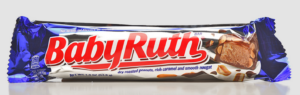
The Creator of Baby Ruth Actually Sued Babe Ruth –The Baby Ruth candy bar was created by the Curtiss Candy Company in 1920 — the same year that baseball legend Babe Ruth hit a then-record 54 home runs. But the Great Bambino was irked that the company was selling a candy bar with such a similar name to his own without offering him any royalties. Rather than take the Curtiss Candy Company to court, the Sultan of Swat decided to make his own candy bar, and in 1926 he debuted Ruth’s Home Run bar. The Curtiss Candy Company responded by turning the tables and taking Ruth to court. They accused the slugger of trying to steal their trademark and capitalize on the success of their brand. In a 1931 deposition, Curtiss founder Otto Schnering insisted the candy was named after “Baby Ruth” Cleveland — the daughter of President Grover Cleveland.  He also attested that the company came up with the name in 1919 before the baseball player had become a household name and that the name was merely coincidental. While the validity of those claims is disputed to this day, the court nonetheless ruled in favor of the candy company, forcing Ruth to end his foray into the world of candy.