


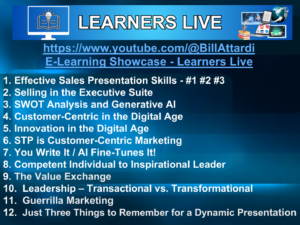
Learners Live

NEMA Launches Career Development Platform to Power the Electroindustry Workforce of the Future

 NEMA announced NEMA Academy, a dynamic new online learning platform designed to strengthen technical training and workforce development across the electroindustry.  The future of manufacturing demands a workforce skilled in robotics, AI, digital tools, and industrial automation, and NEMA Academy is designed to meet that need. Built for professionals at every stage of their careers, the platform provides access to more than 1,400 education and certification opportunities in multiple languages. Courses span a range of topics, including NEMA standards, policy issues, supply chain resilience, emergency preparedness, lighting, and more. With new content added regularly, NEMA also is working with Congress to advance comprehensive workforce development legislation to ensure long-term support for the electrical industry’s workforce. The bipartisan Veterans Energy Transition (VET) Actwill help match veterans with a range of technical and operational skills with the manufacturers of critical electrical equipment and components.  NEMA Launches Career Development Platform To Power the Electroindustry Workforce of the Future – NEMA
America’s Talent Strategy: Building the Workforce for the Golden Age

President Trump has set a bold economic strategy to reindustrialize America, dominate the artificial intelligence (AI) frontier, and reclaim control over the levers of national prosperity. Achieving this vision requires a workforce system capable of propelling American workers into high-wage careers, upholding the dignity of hard work, and delivering the talent businesses need to power the nation’s economic resurgence. This strategy lays out a comprehensive plan to address the workforce needs of American companies, integrate existing workforce development systems to maximize efficiency and effectiveness, provide accountability for workforce training programs, upskill incumbent American workers, and develop alternatives to 4-year college degrees. The goal is to build a durable system that expands our labor force, helps workers advance, supports employers in meeting their needs, and positions the country to lead in today’s economy and to transform our national workforce investments to meet the talent needs of employers, empower more Americans to access high-wage careers, and reindustrialize the United States America’s Talent Strategy: Building the Workforce for the Golden Age

Amazon Is on the Cusp of Using More Robots Than Humans in Its Warehouses

The    e-commerce giant, which has spent years automating tasks previously done by humans in its facilities, has deployed more than one million robots in those workplaces, Amazon said. That is the most it has ever had and near the count of human workers at the facilities. One of Amazon’s newer robots, called Vulcan, has a sense of touch that enables it to pick items from numerous shelves. Amazon has taken recent steps to connect its robots to its order-fulfillment processes, so the machines can work in tandem with each other and with humans.  For some Amazon workers, the increasing automation has meant replacing menial, repetitive work lifting, pulling and sorting with more skilled assignments managing the machines.  Amazon is also rolling out artificial intelligence in its warehouses, Chief Executive Andy Jassy said recently, “to improve inventory placement, demand forecasting, and the efficiency of our robots.” Amazon said it will cut the size of its total workforce in the next several years. Exclusive | Amazon Is on the Cusp of Using More Robots Than Humans in Its Warehouses – WSJ

Google to Fund NECA Training Program

Google is announcing a new paper and support for an effort to train 100,000 electrical workers and 30,000 new apprentices in the United States. This is Google’s news release: AI presents the United States with a generational opportunity for extraordinary innovation and growth. The deployment of AI will grow the American economy, create jobs, accelerate scientific advances and more. Fully realizing these opportunities requires an effort to rapidly increase the capacity of the nation’s existing, sometimes antiquated energy system. This in turn requires accelerating innovation and investment in advanced energy technologies; optimizing use of the existing grid and unlocking construction of new transmission infrastructure; and developing the labor force needed to build new energy infrastructure. Through shared public and private efforts to introduce and support training programs like this one, the U.S. can develop a model for training the next generation workforce. Google to Fund NECA Training Program – electrifiED

The Genesis of the U.S. Space Force – On December 20, 2019, President Donald Trump signed the National Defense Authorization Act (NDAA) for Fiscal Year 2020, officially creating the United States Space Force, a new and independent branch of the U.S. military. The establishment of the Space Force marked a historic shift in how the U.S. views and manages its military operations in space, reflecting the growing importance of space as both a domain of strategic competition and national security. The Space Force is tasked with ensuring the U.S. maintains its superiority in space, focusing on both the defense of space assets and the development of offensive capabilities. Its mission includes:

  1. Space Operations: Overseeing space-based systems, such as satellites, that provide essential services to the U.S. military, including communication, reconnaissance, and missile defense.
  2. Space Security: Protecting U.S. space infrastructure from threats, including anti-satellite weapons, cyberattacks, and other potential forms of disruption by adversarial nations.
  3. Space Research and Development: Developing and deploying cutting-edge space technologies, including space-based defense systems, that ensure the U.S. maintains an edge in space exploration and military operations.
  4. Supporting National Defense: Integrating space capabilities into broader national defense strategies, ensuring that U.S. forces can operate effectively in space as part of a multi-domain approach to warfare.

The Space Force is designed to streamline and strengthen the U.S. military’s space operations, which were previously under the purview of the U.S. Air Force. By separating space operations into a distinct branch, the government hoped to increase focus on space as a critical area of national defense and enhance the U.S. military’s ability to respond to emerging threats. Source: Day in History