


Enbridge and Meta Announce 1.6 GWh Wyoming Solar and Energy Storage Facility to Serve Data Center Needs

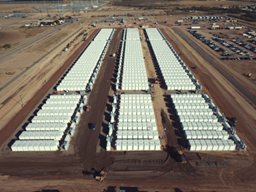 Independent power producer and renewable energy developer Enbridge has announced that Meta will purchase power delivered by the first phase of its Cowboy Project utility-scale solar and energy storage facility. The plan for the $1.2 billion site located near Cheyenne, Wyoming includes 365 MW of solar generation capacity and a 200 MW, 1,600 MWh battery energy storage system (BESS) supplied and serviced by Tesla. The Cowboy Project expands the existing renewable energy partnership between Enbridge and Meta, which now totals approximately 1.6 GW of contracted capacity across North America, and includes a 600 MW solar projectand two wind projects in Texas. Enbridge and Meta announce 1.6 GWh Wyoming solar and energy storage facility to serve data center needs – Energy Storage
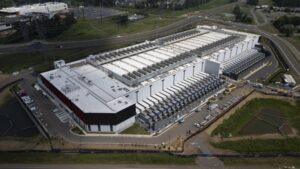 An artificial intelligence data center that would use more electricity than every home in Wyoming combined before expanding to as much as five times that size will be built soon near Cheyenne, according to the city’s mayor. With cool weather — good for keeping computer temperatures down — and an abundance of inexpensive electricity from a top energy-producing state, Wyoming’s capital has become a hub of computing power. The city has been home to Microsoft data centers since 2012. An $800 million data center announced last year by Facebook parent company Meta Platforms is nearing completion. The latest data center, a joint effort between regional energy infrastructure company Tallgrass and AI data center developer Crusoe, would begin at 1.8 gigawatts of electricity and be scalable to 10 gigawatts. A gigawatt can power as many as 1 million homes. But that’s more homes than Wyoming has people. The least populated state, Wyoming, has about 590,000 people. But this proposed data center is so big, it would have its own dedicated energy from gas generation and renewable sources.