Learners Live

Dallas Fed Survey: War Uncertainty Capping Firms’ Ambitions by Geert De Lombaerde

Seven out of 10 oil-and-gas executives surveyed by the Federal Reserve Bank of Dallas think the price of a barrel of West Texas Intermediate (WTI), which flirted with $100 in the last 2 weeks, will finish 2026 below $80. But with the war with Iran “wreaking havoc” in commodity markets, most firms aren’t rushing to overhaul their 2026 production plans.Fed researchers’ quarterly survey of industry players from about 130 companies in Texas and parts of Louisiana and New Mexico showed that the average WTI price forecast for year-end is around $74. That’s up significantly from the $62 outlook from 3 months ago and well below the roughly $94/bbl at which WTI was being priced during the Fed’s survey period earlier this month. At $74, WTI would also be at a price high enough for most production to be profitable. Executives are more positive about the mid- and longer-term price outlook for natural gas than they are for oil. Dallas Fed survey: War uncertainty capping firms’ ambitions | Oil & Gas Journal

For more details from the survey, click here.
Trump Administration Unveils National AI Legislative Framework

The Trump Administration is committed to winning the AI race. It is demonstrating that leadership by issuing a comprehensive national legislative framework that addresses the most pressing policy topics that AI presents. This framework addresses six key objectives:

  1. Protecting Children and Empowering Parents:
  2. Safeguarding and Strengthening American Communities:
  3. Respecting Intellectual Property Rights and Supporting Creators:
  4. Preventing Censorship and Protecting Free Speech:
  5. Enabling Innovation and Ensuring American AI Dominance:
  6. Educating Americans and Developing an AI-Ready Workforce:

Trump Administration Unveils National AI Legislative Framework – electrifiED

The Distributor Is the Heartbeat of Construction Sales by Jim Nowakowski

Manufacturers know what they produce. Engineers know what they specify. Contractors know what they install. But distributors sit at the intersection of all three. The distributors see which products move through their warehouses. They hear the questions contractors ask at the counter. They learn which installations go smoothly and which ones create problems. They understand pricing pressures, availability constraints and the subtle preferences that shape contractor behavior. The Distributor Is the Heartbeat of Construction Sales | Electrical Wholesaling

Climate Intuition: Demand Is Here, Time to Build the Grid of Tomorrow

Electric grids worldwide are undergoing a transformation as surging electricity demand from data centers and electrification collides with aging, risk-prone infrastructure. This creates both national security imperatives and investment opportunities for grid resilience. Activities that harden, expand and modernize the grid are becoming increasingly attractive investment opportunities and policy priorities globally. Key takeaways: Grid Resilience: Neglected No More

  • Electricity demand is surging, driven by data centers and electrification. To meet it, grid infrastructure will need to be built and upgraded over the next decade.
  • The aging grid is a national security risk. Decades-old equipment is more likely to fail and is vulnerable to extreme weather, cyber risks and geopolitical threats, making it easier for adversaries or disasters to cause widespread outages if not addressed.
  • This also presents a massive investment opportunity. Globally, about $5.8 trillion is forecast for grid upgrades between 2026–2035, with roughly $700 billion for digital grid tech; the U.S. alone expects investments of about $1 trillion over the coming decade.
  • Policies and permits are key to success. While governments are pushing modernization, long siting and approval timelines can slow progress and affect costs for consumers.

Bill Gates Says Only These 3 Jobs Are Safe from AI Takeover

Gates has described this shift as the arrival of “free intelligence,” a phrase that captures both the promise and the uncertainty of what’s ahead. What that means in practice is a world where AI doesn’t just assist with tasks but becomes deeply embedded in how problems are solved, decisions are made, and services are delivered. Eventually, “the machine will probably be superior to humans – because the breadth of knowledge that you need to make some of these decisions really goes beyond individual human cognition,” the billionaire philanthropist said. Some early answers are beginning to emerge – and they don’t necessarily match what people expected. Instead of manual labor being hit first, many of the roles most exposed to AI are found in offices, behind screens, and in industries long considered stable. According to a Microsoft study released in December 2025, these are among the fields he believes will remain and the positions most at risk: Bill Gates says only these 3 jobs are safe from AI takeover

Nvidia, Emerald AI Partner with Power Companies on New AI Factories

Nvidia and Emerald AI said they would work with several power producers to develop a new class of AI factories, designed to connect to energy grids faster and support power systems as surging demand for artificial intelligence strains electricity infrastructure. The facilities will operate as what the companies on Monday called flexible energy assets, supporting power grids by modulating consumption and leveraging on-site generation and storage. Participating power companies include AES, Constellation, Invenergy, NextEra Energy, Nscale Energy & Power, and Vistra. Nvidia, Emerald AI Partner With Power Companies on New AI Factories – WSJ

Report Shows TSMC Hitting Demand Maximum

Taiwan Semiconductor Manufacturing Company (TSMC) is reportedly reaching its limit for supply chain demand, creating bottlenecks for the first time in the company’s history. As demand if AI chips grows, the company that once thought it would never hit capacity is now falling behind. In a report in Reuters, the strain is forcing TSMC to build more facilities by the end of next year. TSMC announced it was struggling with demand earlier this year, as the AI infrastructure grow at a rapid pace. The company is continuing its partnerships with Nvidia and Apple. Business News Today – tEDmag

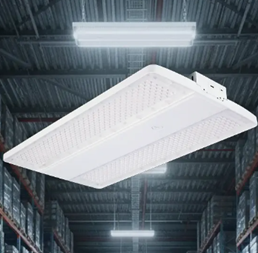
LED Beam Selectable Linear Highbay by SATCO/NUVO

The SATCO|NUVO LED Beam Selectable Linear Highbays deliver powerful, configurable illumination for high-ceiling commercial and industrial environments. Each fixture features selectable beam distributions of 45°x100°, 65°x95°, or 90°x90°, providing precise control for aisle, general, or wide-area lighting layouts. All models offer 3CCT selectability (3000K/4000K/5000K), multiple wattage options across four lumen packages, and universal 120–347V operation. Built with die-cast aluminum housings and polycarbonate lenses, these highbays are IP20 and IK09 rated, DLC 6.0 Listed, supporting evolving efficiency standards, and approved for wet locations. An integrated sensor port and included suspension kit add installation flexibility, with additional mounting and accessory options available separately. Rated for 50,000 hours and backed by a 5-year warranty, these fixtures combine durability, performance, and adaptable light distribution in a single platform. Spec Sheet at:  SN1945_LED_BEAM_SELECTABLE_LINEAR_HI-BAY_PI_Sheet_1_26.pdf

  • Beam Selectable: 45°x100° / 65°x95° / 90°x90°
  • DLC Premium Listed
  • Multiple Wattage Packages Available
  • 3 CCT Selectable: 3000K/4000K/5000K
  • 41″ Suspension Kit Included

LED Beam Selectable Linear Highbay

How the Red-Hot AI Data Center Boom Is Igniting Demand for a New, Lucrative Career Path: Trade Workers

Demand for new AI data centers is surging, but they can’t build themselves. Big Tech is funneling billions into building out these specialized facilities, with the four hyperscalers, AlphabetMicrosoftMeta, and Amazoncommitting nearly $700 billion in combined capex spending this year to fund these developments. While anxiety around AI replacing white-collar jobs has reached a fever pitch, the data center boom is creating lucrative opportunities for skilled trade workers. Between 2022 and 2026, demand for robotic technicians increased by 107%. For cooling — or HVAC — system engineers, the growth rate was 67%, workers and electricians increased by 27% and vacancies for industrial automation technicians grew by 51%. Meanwhile, it’s essential to update outdated mechanical, electrical, and plumbing systems every four to six years. Specialized and technical professionals moving into high-level data center roles often see a 25% to 30% pay increase.  AI ignites demand for tradespeople powering data center build-out

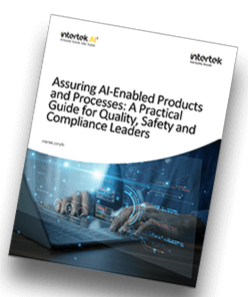
White Paper by Intertek: A Comprehensive Guide to AI Quality Assurance

Artificial Intelligence (AI) is transforming products, processes, and decision-making across industries, bringing enormous opportunity alongside a new category of risks around safety, bias, drift, data governance, and regulatory compliance. Rapidly evolving regulations like the EU AI Act all present challenges that traditional quality systems weren’t designed to handle. Download our new whitepaper to learn how to embed AI into your existing quality systems, strengthen audit readiness, and deploy AI with confidence across global markets.  In this paper you’ll learn:
  • Where AI is entering your organization and how to manage it
  • The most common AI risks, including hallucinations, bias, and loss of control
  • What regulators expect now, and what’s coming next
  • How to apply proven quality principles, including testing, validation, monitoring, and governance, to AI systems

If AI touches your products, processes, or decisions, this guide is built for you: A Comprehensive Guide to AI Quality Assurance | White Paper

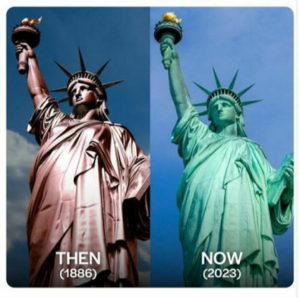
The Statue of Liberty was made with copper but due to oxidation, it turned green.

When the “Lady in the Harbor” first arrived in New York in 1886, she didn’t look like the mint-green icon we know today. In fact, for the first twenty years of her life, she stood as a towering, metallic beacon of reddish-gold. Designed by French sculptor Frédéric Auguste Bartholdi and engineered by Alexandre Gustave Eiffel, the statue was a gift from France to America. To build her, Bartholdi chose copper for three practical reasons:

  • Malleability:It could be hammered into elaborate, thin sheets.
  • Weight:Copper is lighter than stone or bronze, making it easier to ship 350 individual pieces across the Atlantic.
  • Durability:It was strong enough to survive a 27-day ocean voyage and the harsh winds of the harbor.

When she was unveiled on October 28, 1886, her skin—made of 300 copper sheets roughly the thickness of two pennies—shone with a bright, metallic brown luster. The transformation from “penny-colored” to “patina-green” wasn’t planned. Bartholdi actually expected the statue to age into a deeper, darker red. However, the unique environment of New York Harbor—a mix of salt air, moisture, and industrial pollution—triggered a process called oxidation.

The Timeline of Change:

  1. 1886–1900:The bright copper dulled into a dark, muddy brown.
  2. 1903:The first hints of a light green crust, or “patina,” began to appear.
  3. 1906:The color change was so controversial that Congress nearly stepped in. They appropriated $62,000 to paint the statue back to its original color, but the public protested, calling the idea “sacrilege.”
  4. 1910–1920:The statue was a patchy mix of brown and green until 1920, when the oxidation was complete, leaving her entirely teal.

While we now view the green color as iconic, it actually serves a vital structural purpose. The layer of verdigris (the green patina) acts as a protective shield. It seals the copper underneath, preventing the metal from further corrosion and weathering.  By the time the color fully changed, a new generation of immigrants had arrived in America seeing a green statue.