Learners Live

Meta to Build $10B AI Data Center in Northeast Louisiana

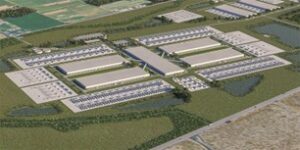
A transformational investment that cements the state’s status as a major innovation hub and puts this picturesque rural community on the leading edge of a global digital revolution. Meta projects the data center will support 500 or more direct new jobs in Richland Parish. Louisiana Economic Development (LED) estimates the project will result in the creation of more than 1,000 indirect jobs, for a total of more than 1,500 potential new jobs in the Northeast Region. The company estimates 5,000 construction workers at peak of construction on the 2,250-acre former Franklin Farm megasite that sits between the municipalities of Rayville and Delhi, about 30 miles east of Monroe. Meta to Build $10B AI Data Center in Northeast Louisiana – electrifiED
AI Startup Anthropic Announces $50 Billion Data Center Investment

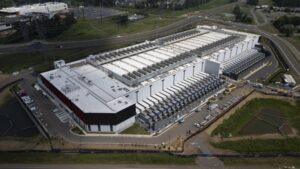
Anthropic, which was launched in 2021 by former staff of OpenAI and is known for its “Claude” platform, said it plans initial sites in Texas and New York. Artificial intelligence startup Anthropic announced Wednesday a $50 billion drive to build new data centers in a partnership with British venture Fluidstack. Tech companies have been on a building spree for additional data centers, which provide the computing storage and processing power required by artificial intelligence. AI Startup Anthropic Announces $50 Billion Data Center Investment | IndustryWeek

Cheyenne to Host Massive AI Data Center Using More Electricity than All Wyoming Homes Combined

An artificial intelligence data center that would use more electricity than every home in Wyoming combined before expanding to as much as five times that size will be built soon near Cheyenne, according to the city’s mayor. With cool weather — good for keeping computer temperatures down — and an abundance of inexpensive electricity from a top energy-producing state, Wyoming’s capital has become a hub of computing power. The city has been home to Microsoft data centers since 2012. An $800 million data center announced last year by Facebook parent company Meta Platforms is nearing completion. The latest data center, a joint effort between regional energy infrastructure company Tallgrass and AI data center developer Crusoe, would begin at 1.8 gigawatts of electricity and be scalable to 10 gigawatts. A gigawatt can power as many as 1 million homes. But that’s more homes than Wyoming has people. The least populated state, Wyoming, has about 590,000 people. But this proposed data center is so big, it would have its own dedicated energy from gas generation and renewable sources.  Cheyenne to host massive AI data center using more electricity than all Wyoming homes combined | AP News

Trump Backs Massive Middle East AI Hub to Counter China

President Donald Trump has signed off on a major agreement with the United Arab Emirates to build the largest artificial intelligence campus outside the United States. The agreement marks a sharp turn from the Biden-era policy, which limited chip exports to nations seen as too close to China. At the center of the pact is a 10-square-mile AI campus in Abu Dhabi, backed by 5 gigawatts of power—enough to support around 2.5 million of Nvidia’s flagship B200 chips………… The U.S. Commerce Department called the initiative the largest AI infrastructure project to date. UAE state-linked firm G42 will construct the site, but American companies will operate it and provide U.S.-managed cloud services across the region. The White House said the UAE has committed to building or financing equivalent data centers in the U.S., while also aligning its national security policies with American standards.  The project signals a deepening U.S. presence in Middle East tech infrastructure and a possible new chapter in global AI competition.  Trump Backs Massive Middle East AI Hub to Counter China – Newsweek

How AI is Driving the Next Wave of Energy Innovation

Over the past two years AI has reigned in the minds of business leaders across the board.  While some industries remain hesitant in embedding AI into their business, leaders from the energy sector have been more open to AI led transformation possibilities in their businesses. Several energy organizations across the world are methodically experimenting with AI to drive digital transformation, with the sector already seeing real business value from AI.  According to the ‘KPMG International’s Global Tech Report: Energy insights’, 67% of energy companies are achieving measurable impact from active AI use cases. A big advantage of the energy sector is that there is a lot of data available, much of which is in digitised form. This availability of structured data complements with the broader structured and unstructured data available from external sources, creating a rich base for action in the energy companies. As a result, AI adoption in the energy sector is moving beyond proof-of-concept. Powering the Future: How AI is Driving the Next Wave of Energy Innovation

The AI Data-Center Boom Is Coming to America’s Heartland by Jennifer Hiller

Meta and other tech companies are scouring rural America for land, transmission lines and natural gas. Meta Platformsscooped up 2,700 acres of farmland last year for what would be its largest-ever data center, built over flat rice fields 45 minutes west of the Mississippi River.  At 4 million square feet, or 70 football fields, Meta’s data center will cost $10 billion and sit on more acreage than Louisiana State University in Baton Rouge, which has more than 34,000 students. Building advanced artificial-intelligence systems will take city-sized amounts of power, which has turbocharged electricity demand projections for the first time this century. The AI Data-Center Boom Is Coming to America’s Heartland – WSJ

The Statue of Liberty was made with copper but due to oxidation, it turned green.

When the “Lady in the Harbor” first arrived in New York in 1886, she didn’t look like the mint-green icon we know today. In fact, for the first twenty years of her life, she stood as a towering, metallic beacon of reddish-gold. Designed by French sculptor Frédéric Auguste Bartholdi and engineered by Alexandre Gustave Eiffel, the statue was a gift from France to America. To build her, Bartholdi chose copper for three practical reasons:

  • Malleability:It could be hammered into elaborate, thin sheets.
  • Weight:Copper is lighter than stone or bronze, making it easier to ship 350 individual pieces across the Atlantic.
  • Durability:It was strong enough to survive a 27-day ocean voyage and the harsh winds of the harbor.

When she was unveiled on October 28, 1886, her skin—made of 300 copper sheets roughly the thickness of two pennies—shone with a bright, metallic brown luster. The transformation from “penny-colored” to “patina-green” wasn’t planned. Bartholdi actually expected the statue to age into a deeper, darker red. However, the unique environment of New York Harbor—a mix of salt air, moisture, and industrial pollution—triggered a process called oxidation.

The Timeline of Change:

  1. 1886–1900:The bright copper dulled into a dark, muddy brown.
  2. 1903:The first hints of a light green crust, or “patina,” began to appear.
  3. 1906:The color change was so controversial that Congress nearly stepped in. They appropriated $62,000 to paint the statue back to its original color, but the public protested, calling the idea “sacrilege.”
  4. 1910–1920:The statue was a patchy mix of brown and green until 1920, when the oxidation was complete, leaving her entirely teal.

While we now view the green color as iconic, it actually serves a vital structural purpose. The layer of verdigris (the green patina) acts as a protective shield. It seals the copper underneath, preventing the metal from further corrosion and weathering.  By the time the color fully changed, a new generation of immigrants had arrived in America seeing a green statue.