


Learners Live

Trump’s Permitting Boss Aims to Deliver on AI Data Center Plans by Stephen Lee

The White House’s new permitting director wants to vastly expand her office’s work in getting projects built—including, for the first time, data centers and artificial intelligence facilities. That would be a boon to President Donald Trump, whose economic policy advocates for the construction of projects like OpenAI Inc.‘s $500 billion Stargate AI venture, Taiwan Semiconductor Manufacturing Co.‘s $100 billion investment in new chip factories, and as many new hardrock minesas possible. Many of those projects will have to secure federal permits under the National Environmental Policy Act before they can break ground, a daunting prospect that can take years. Enter the Federal Permitting Improvement Steering Council, which shepherds complex projects through the process by harmonizing different agencies’ environmental reviews, anticipating hurdles before they create delays, and holding agencies accountable to deadlines. On average, the 25-person council says it’s able to shave 18 months off a project’s review time. Trump’s Permitting Boss Aims to Deliver on AI Data Center Plans

DOE Announces Accelerated Siting of Data Centers

Oak Ridge National Laboratory (ORNL) and Elementl Power have teamed up to advance a data-driven siting approach for advanced nuclear projects. The work started through a U.S. Department of Energy (DOE) GAIN voucher and contributed to Elementl’s recent agreement with Google to prepare three U.S. sites for advanced nuclear deployment. Each site would have at least 600 megawatts of capacity and would likely be used to power large-scale data centers. Nuclear energy can provide around-the-clock abundant and reliable electricity, making it an attractive solution to meet rising energy demand from AI and data centers. Google will provide early-stage capital to develop three sites for advanced reactor projects with final technology selection and site confirmation pending further development milestones. DOE Announces Accelerated Siting of Data Centers – electrifiED

N.J. Explores Nuclear Strategy for Energy Goals

 New Jersey is projected to need as much as 10 gigawatts of clean, firm energy capacity by 2035 to maintain system reliability and meet the state’s clean electricity goals. The New Jersey Board of Public Utilities has initiated a request for information to evaluate the possible role new nuclear power plants could have in meeting the state’s energy objectives. The RFI seeks insights into how nuclear can support growing energy demands, particularly from large consumers like AI data centers.  New Jersey BPU eyes potential for new nuclear | Utility Dive

Can Solar Help Offset the AI’s Energy Demand? by Greg Zimmerman

Demand from data centers is expected to more than triple by 2028, according to the Department of Energy. This is largely due to the explosion of Artificial Intelligence, and its intense demand for electricity.  Meta, Amazon, Google, and Microsoft are just a few of the big tech companies investing billions in solar technology. Two of the main reasons for the investment in solar is that the solar development timeline is much shorter than for other sources electricity. At 1.4 years, solar is the shortest timeline to develop an 800-megawatt solar plant. That’s compared to 15 years for a nuclear power and 6.7 years for a coal-fired power plant.  Also, solar is much less expensive, is easily scalable, and pays back much quicker than other sources of electricity.   Can Solar Help Offset the AI’s Energy Demand?  – Facility Management Green Quick Read

Coal Plant to be Transformed into Gas-Powered Data Center Campus

 Homer City Redevelopment (HCR) and Kiewit Power Constructors Co. (Kiewit) announced the future of the former Homer City Generating Station. Homer City – previously the largest coal-burning power plant in Pennsylvania – will be transformed into a more than 3,200-acre natural gas-powered data center campus, designed to meet the growing artificial intelligence (AI) and high-performance computing (HPC) needs of the innovative technology companies shaping America’s digital future. GE Vernovawill provide seven high-efficiency 7HA.02 hydrogen-enabled, gas-fired turbines, with the first deliveries expected to begin in 2026.  Coal Plant to be Transformed into Gas-Powered Data Center Campus – electrifiED

NEMA Releases Grid Reliability Study

The National Electrical Manufacturers Association (NEMA) has released its new study on grid reliability, “A Reliable Grid for an Electric Future”, which focuses on challenges we face with electric demand, consumption and production over the next 25 years. The study highlights U.S. electricity demand outlook to 2050 and outlines technology and policy solutions to meet demand growth. Two key drivers behind the demand will be data centers and EV charging. To prioritize grid reliability and ensure our electrical infrastructure can adapt to surging demand and the integration of renewable energy, we can’t build capacity fast enough. We need to invest in a suite of innovative near-term technologies to meet demand growth and prioritize policy and regulatory certainty to deliver a reliable and affordable energy system. makeitelectric.org Study at: pa-nema-grid-flexibility-study.pdf

Data Centers: More Power to Them by Jim Lucy

2025’s surge in data center construction will be fueled by the greater demands of AI (artificial intelligence) for electrical power. The explosive growth in data center construction and the related increases in demand for the electrical system installation and supply and logistical services they require is quite unlike anything the electrical business has ever seen. Over the years there’s been booms in speculative office construction, energy-efficient lighting retrofits and the installation of power quality industrial automation products. But the dollars being spent on new data centers – and the electrical construction materials that help power them – may very well be unmatched. This all means big business for electrical contractors, design engineers and other electrical professionals involved with data center construction. Data Centers: More Power to Them | Electrical Wholesaling
Data Center Boom Impacting the Lighting Industry by David Shiller

The data center sector has exploded into a major force in construction, fueled by the increasing demands of artificial intelligence. This surge is significantly boosting nonresidential construction planning, with projections indicating it could add substantially to U.S. economic growth in the coming years. This data center construction boom hasn’t gone unnoticed in the lighting industry. Some manufacturers are beefing up their product lines for the data center vertical. Some are increasing their marketing to position themselves as leaders in the data center lighting vertical, and some manufacturers are hiring specification salespeople to specialize in just the data center spec market. Major tech companies are leading the data center expansion with massive investments. Data Center Boom Impacting The Lighting Industry | LightNOW

Will Nuclear Power Be the Answer for Data Centers’ Voracious Energy Needs? by John Caulfield

The need to balance energy demands with carbon footprint reduction goals is motivating Big Tech companies to explore nuclear as an alternative power source. That is what’s motivating Big Tech companies—which pumped more than $180 billion into data center expansions and related infrastructure in 2024, according to the research firm Dell’Oro Group—to turn to nuclear as a future alternative power source. Several companies have struck strategic investment agreements to secure their access to this cleaner power, and to support the development and potential commercialization of advanced nuclear reactors. Will nuclear power be the answer for data centers’ voracious energy needs? | Building Design+Construction

More Electricity Needed Faster to Further National Energy Security, Says S&P Global Report by Kim Riley

The summary of the S. National Power Demand Study— which will be released in its entirety in the coming weeks — highlights the extent of the electricity demand growth facing the United States, and presents some of the tools that can be tapped to meet the moment in furtherance of national energy security. Electricity demand in America will surge by 35 percent to 50 percent between 2024 and 2040, primarily driven by AI data centers, new manufacturing activity, electric vehicles (EVs), space-heating electrification, and broad economic growth, according to the S&P Global study. A key finding is that the demand is growing faster than the supply of new energy solutions that could power it, creating an urgent need for faster policy action on permitting and grid interconnection and an all-of-the-above energy strategy within the sector, according to S&P Global.  More electricity needed faster to further national energy security, says S&P Global report – Daily Energy Insider

Happy St. Patrick’s Day—whether you’re going fact or legend, it’s a great excuse to celebrate!

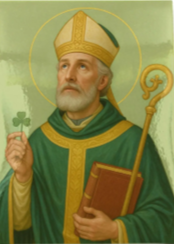
St. Patrick is a mix of solid historical fact and popular myth/legend that grew over centuries. He was a real historical figure—a British-born missionary (likely from what is now Scotland or northern England/Wales area) who lived in the 5th century (roughly 385–461 AD). His birth name was probably Maewyn Succat, and he became known as Patricius (Patrick) later. He wrote two surviving documents: his Confessio (Confession) and a letter to Coroticus, which are the main primary sources about his life. These confirm he was kidnapped by Irish raiders as a teenager, enslaved in Ireland for about six years (herding sheep), escaped, trained for the church, and returned as a missionary bishop to convert the Irish to Christianity. He wasn’t the first Christian in Ireland—some communities already existed—but he’s credited with major missionary work and is the patron saint of Ireland.

Many beloved St. Patrick’s Day traditions and stories are myths or later embellishments: Myth: He drove the snakes out of Ireland. Completely legendary. Ireland has had no native snakes since the last Ice Age (about 10,000+ years ago)—the post-glacial island was isolated, and snakes never recolonized it. The “snakes” story symbolizes driving out paganism or “evil”  but it’s not historical. Myth: He used the shamrock to explain the Holy Trinity. This is a charming story, but it doesn’t show up in Patrick’s own writings or early biographies. While the shamrock (a three-leaf clover) became a symbol of Ireland and St. Patrick’s Day, the Trinity analogy is probably a later invention. Myth: St. Patrick was Irish by birth. No—he was Romano-British, captured and brought to Ireland against his will. Other common myths: Green wasn’t always the color associated with him or the holiday; massive parades and “wearing of the green” became big in America first; he didn’t drink green beer or eat corned beef and cabbage, those are more modern Irish-American traditions. In short: The man himself is fact—a brave, devout missionary who helped spread Christianity in Ireland. But many of the fun, magical tales attached to him are myths.

ni