Learners Live

Microsoft, Google among 24 firms joining US AI ‘Genesis Mission’ by Courtney Subramanian

Two dozen top artificial intelligence companies have signed on to join the federal government’s “Genesis Mission,” an effort by the Trump administration to boost the use of the emerging technology for scientific discovery and energy projects. OpenAI, Microsoft Corp., Nvidia Corp., Amazon Web Services and Alphabet Inc.’s Google were among the firms that have either already signed memorandums of understanding with the government, have existing projects with the Energy Department or national laboratories, or have expressed interest in joining the effort, according to a White House statement. The mission will harness the computing resources of the Energy Department’s national labs to tap federal datasets and enable more experiments utilizing AI, Michael Kratsios said at the time. He predicted the effort would help shorten the timeline for scientific discoveries. Microsoft, Google among 24 firms joining US AI ‘Genesis Mission’

Anthropic, Microsoft Announce New AI Data Center Projects as Industry’s Construction Push Continues by Matt O’Brien

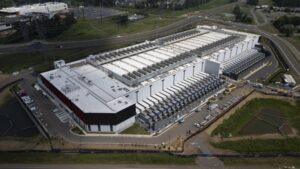
Artificial intelligence company Anthropic announced a $50 billion investment in computing infrastructure on Wednesday that will include new data centers in Texas and New York. Microsoft also on Wednesday announced a new data center under construction in Atlanta, Georgia, describing it as connected to another in Wisconsin to form a “massive supercomputer” running on hundreds of thousands of Nvidia chips to power AI technology. The latest deals show that the tech industry is moving forward on huge spending to build energy-hungry AI infrastructure, despite lingering financial concerns about a bubble, environmental considerationsand the political effects of fast-rising electricity bills in the communities where the massive buildings are constructed. Anthropic, Microsoft announce new AI data centers

Microsoft CFO Highlights Record $35B in AI Infrastructure Spending

Microsoft CFO Amy Hood revealed a record $34.9 billion in infrastructure expenditures for the first quarter, emphasizing heavy investment in GPUs, CPUs, and datacenter infrastructure to meet surging demand for artificial intelligence. This capex figure significantly exceeded prior forecasts and reflects the company’s commitment to rapidly expanding capacity to support AI-driven growth and customer needs. Microsoft’s CFO Highlights Record Capex, OpenAI Deal in Internal Memo – Business Insider

Nvidia to Invest $100 Billion in OpenAI to Help Expand the ChatGPT Maker’s Computing Power

Chipmaker Nvidia will invest $100 billion in OpenAI as part of a partnership announced Monday that will add at least 10 gigawatts of Nvidia AI data centers to ramp up the computing power for the owner of the artificial intelligence chatbot ChatGPT. Per the letter of intent signed by the companies, the first gigawatt of Nvidia systems will be deployed in the second half of 2026. Nvidia and OpenAI said they would be finalizing the details of the arrangement in the coming weeks. The Nvidia-OpenAI partnership also comes about 10 days after OpenAI said it had reached a new tentative agreement that will give Microsoft a $100 billion equity stake in its for-profit corporation. OpenAI is technically controlled by its nonprofit. OpenAI says it has 700 million weekly active users. Nvidia to invest $100 billion in OpenAI to help expand ChatGPT maker’s computing power | AP News

Cheyenne to Host Massive AI Data Center Using More Electricity than All Wyoming Homes Combined

An artificial intelligence data center that would use more electricity than every home in Wyoming combined before expanding to as much as five times that size will be built soon near Cheyenne, according to the city’s mayor. With cool weather — good for keeping computer temperatures down — and an abundance of inexpensive electricity from a top energy-producing state, Wyoming’s capital has become a hub of computing power. The city has been home to Microsoft data centers since 2012. An $800 million data center announced last year by Facebook parent company Meta Platforms is nearing completion. The latest data center, a joint effort between regional energy infrastructure company Tallgrass and AI data center developer Crusoe, would begin at 1.8 gigawatts of electricity and be scalable to 10 gigawatts. A gigawatt can power as many as 1 million homes. But that’s more homes than Wyoming has people. The least populated state, Wyoming, has about 590,000 people. But this proposed data center is so big, it would have its own dedicated energy from gas generation and renewable sources.  Cheyenne to host massive AI data center using more electricity than all Wyoming homes combined | AP News

Announcing Grok 3 and Grok 3 Mini on Azure AI Foundry

Microsoft and xAI are thrilled to unveil the availability of Grok 3 and Grok 3 Mini into the Azure AI Foundry Models, marking a significant milestone in AI accessibility and innovation. This collaboration combines xAI’s cutting-edge models with Azure’s enterprise-ready infrastructure, giving developers access to Grok 3’s advanced capabilities in a secure, scalable environment.  Grok models enable a range of enterprise scenarios with advanced capabilities in reasoning, coding, and visual processing. Announcing Grok 3 and Grok 3 Mini on Azure AI Foundry | Azure AI Foundry Blog

Telling Time – 12-hour time is a very ancient system that traces back to the Mesopotamian empires. They had a cultural fixation with the number 12, used a base-12 numerical system, and divided up most things into 12ths whenever possible – including day and night. The 12 hours of day and 12 hours of night system spread throughout Europe and the Middle East and has defied multiple attempts to change it over the centuries. Also, for anyone curious as to why there was such a love of the number 12, it was because that was how they counted on their hand. Look at your hand. Notice how each of your fingers minus your thumb has three easily identifiable parts to it. They used to count by using their thumb to count each part of the finger, much in the same way we count to 10 using our fingers today. So, 12 was the max you could count on one hand.