


Learners Live

White Paper: Navigating the Journey to AI-Ready Buildings by Schneider Electric

This paper explores how AI systems can be implemented and operated in commercial buildings to address the significant challenges that facility managers and building owners face today and in the immediate future. It also considers the wide range of benefits and new opportunities presented by the adoption of AI-enabled technologies and platforms, as well as all the key requirements for implementing AI in commercial buildings and across real estate portfolios. Navigating the Journey to AI-Ready Buildings | Buildings
NEMA Celebrates Make It American™ Program’s First Anniversary with Landmark Schneider Electric Certification Milestone

In a first for American manufacturing, the National Electrical Manufacturers Association (NEMA) today announced that Schneider Electric has earned Make It AmericanTM certification for each of its 20-plus U.S. manufacturing facilities – the first company in the program’s history to certify its entire domestic manufacturing footprint. The milestone coincides with the one-year anniversary of the Make It American program’s launch and underscores the growing momentum among American manufacturers to demonstrate and validate their commitment to domestic production. NEMA Celebrates Make It American™ Program’s First Anniversary with Landmark Schneider Electric Certification Milestone – NEMA

A.I. Doesn’t Have to Mean Layoffs by Patricia Cohen

A French multinational, Schneider Electric, decided to use artificial intelligence in manufacturing to make workers more productive, rather than to replace them. Here’s how that’s going. For many chief executives, success in adopting artificial intelligence is measured by the number of jobs they can eliminate. But such views reflect “a very narrow understanding” of A.I.’s potential, said Erik Brynjolfsson, who directs the Digital Economy Lab  at Stanford University. It’s a message that Schneider Electric, a global energy technology company based in France, has taken to heart. Before the company started using A.I., customer service agents received thousands of questions from callers and engaged in a grand hunt through millions of pages of information to track down the answer. Now A.I. does the hunting and details how the information was selected and the source. The agent then reviews and if necessary, modifies and refines the answer with the caller. In the last three months of 2025, call centers fielded 150,000 questions. Three-quarters of the time, A.I. was able to provide the right answer to straightforward questions. I. Doesn’t Have to Mean Layoffs – The New York Times

Schneider Electric to Invest Over $700 Million in the U.S.

 The company’s investments support the country’s focus on bolstering the nation’s energy infrastructure to power AI growth, boost domestic manufacturing, and strengthen energy security. The investment is the largest planned single capital expenditure commitment by Schneider Electric in its 135+ year history. It includes manufacturing expansions and job growth, reflecting the company’s robust customer demand for solutions to increase energy efficiency, scale industrial automation, and deliver a more reliable grid. Coupled with previous investments in 2023 and 2024 to strengthen its North American supply chain, Schneider Electric’s latest U.S. planned investment will surpass $1 billion so far this decade. This new planned investment is expected to create over 1,000 new jobs and help Schneider Electric continue to play a leading role in shaping a more innovative, affordable, and energy-efficient future in the U.S. Schneider Electric to Invest Over $700 Million in the U.S. – tEDmag 

Interesting: The Three Pillars of Independence of an Organization

The 3 Pillars of Independence most commonly refers to a framework from the UK voluntary sector (specifically promoted by organizations like Bond and the Directory of Social Change). It is a toolkit for assessing and maintaining the independence of charities, NGOs, or civil society organizations.

The Three Pillars are:

  1. Independent of Party Politics – The organization (or regulator) must remain free from bias or influence by any political party or the government of the day. Decisions should be impartial, not favoring one political side.
  2. Independent of Populism – It should not be swayed by popular public opinion, media-driven campaigns, or transient public pressure, especially on controversial or unpopular causes.
  3. Independent of the Press – Freedom from media influence or pressure, ensuring decisions are based on evidence and law rather than headlines or public narratives.

This toolkit was created to monitor potential political encroachment on charitable regulation and to ensure charities can operate without undue external interference.


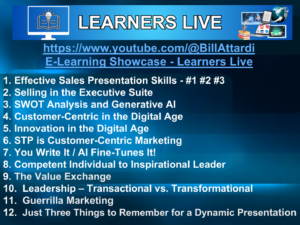
Check out the learning sessions we posted…

August Blog: Learning to Get Better by Bill Attardi

WE ARE NOW LIVE ON YOUTUBE: https://www.youtube.com/@BillAttardi