Google and Siemens Invest in Electrical Training to Support Future Infrastructure Needs by Tom Zind

Google and Siemens are investing heavily in electrical training programs to combat a looming shortage of skilled electrical workers. Key Takeaways:
- Google plans to fund training for 130,000 total electrical workers and apprentices, leveraging AI and virtual reality to modernize education.
- Siemens aims to add 200,000 electricians and manufacturing experts by 2030 through expanded partnerships and digital training tools.
- Both companies emphasize the critical role of industry collaboration and innovative training methods to address future workforce shortages.
- These efforts highlight a proactive approach to workforce development in response to industry growth and technological advancements.
Google and Siemens Invest in Electrical Training to Support Future Infrastructure Needs | EC&M
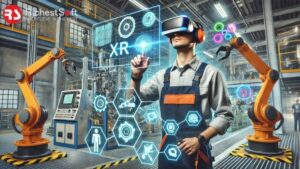 In today’s fast-paced digital workplace, organizations are searching for more effective ways to skill and reskill their workforces. Extended reality (XR), which encompasses Virtual Reality (VR), Mixed Reality (MR), and Augmented Reality (AR), offers an immersive and highly effective alternative. These XR technologies are not just more engaging—they also work in harmony with how the human brain learns best. Neuroscience shows that experiential learning—learning by doing—activates multiple regions of the brain at once. XR places learners in a simulated environment that mimics real-life scenarios, tapping into the brain’s natural mechanisms for spatial and sensory learning. This immersive context not only minimizes distractions but also enhances focus and recall through contextual cues that the brain retains as lived experiences.