Contractor Connect Training by Leviton

The #MoreWithLeviton Contractor Advantage, Future‑Ready, and NextGen learning experiences give contractors a powerful edge by helping them Learn More, Do More, and Sell More through deeper knowledge, modern installation skills, and forward‑looking insight across residential, commercial, and industrial applications. These programs combine expert‑led instruction, demonstrations of the latest electrical infrastructure technology, and practical guidance spanning applications, codes, customer motivations, whole‑home optimization, smart technologies, EV readiness, and energy management. Contractors walk away with enhanced expertise, stronger project outcomes, and new opportunities to grow their business and meet evolving customer expectations. Register for in-person events at Leviton LIVE experience centers in Lake Nona, FL or Chicago, IL to connect with contractors across the country, share what’s new, and help you grow your business with practical, hands-on experience. Contractor Connect Training
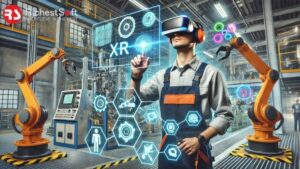 In today’s fast-paced digital workplace, organizations are searching for more effective ways to skill and reskill their workforces. Extended reality (XR), which encompasses Virtual Reality (VR), Mixed Reality (MR), and Augmented Reality (AR), offers an immersive and highly effective alternative. These XR technologies are not just more engaging—they also work in harmony with how the human brain learns best. Neuroscience shows that experiential learning—learning by doing—activates multiple regions of the brain at once. XR places learners in a simulated environment that mimics real-life scenarios, tapping into the brain’s natural mechanisms for spatial and sensory learning. This immersive context not only minimizes distractions but also enhances focus and recall through contextual cues that the brain retains as lived experiences.